
Have you ever noticed that sometimes your body seems to react before your mind even has a chance to catch up? Maybe you feel anxious for no reason, suddenly “shut down,” or experience waves of anger or panic that feel bigger than the situation. You’re not alone—and your nervous system is at the heart of it all. One of the most powerful tools for nervous system regulation is Polyvagal Theory, developed by Dr. Stephen Porges.
This framework gives us a map for understanding how our bodies and nervous systems respond to safety, stress, and social connection. By learning how your nervous system works, you can begin to feel less shame about your emotional and physical reactions, make conscious choices, and build the skills to regulate your responses more effectively.
In this post, I’ll break down Polyvagal Theory in a friendly, practical way, explain why it matters in therapy, and share how understanding it can help you feel calmer, safer, and more in control.
What is Polyvagal Theory and How Does it Support Nervous System Regulation?
Polyvagal Theory focuses on the vagus nerve, a key nerve in your parasympathetic nervous system. The vagus nerve helps regulate your heart, lungs, and digestive system, but it does so much more than that—it helps your body sense safety and allows you to feel good about spending time with others.
“Polyvagal” literally means “many vagus nerves,” and the theory explains that there are two main branches of the vagus nerve, plus the sympathetic nervous system, each affecting how we feel and respond:
1.Ventral Vagal (Safe and Social)
- When this branch is active, you feel calm, grounded, and able to connect with others.
- Your body supports relaxed breathing, heart rate regulation, and social engagement.
- This state allows you to process emotions more effectively and feel present in your interactions.
2. Dorsal Vagal (Shutdown or Freeze)
- When you experience extreme stress or threat, this branch can cause numbness, disconnection, or “shutting down.”
- Your heart rate may slow, breathing may become shallow, and you may feel disconnected from yourself or others.
- This response is protective—it’s your body’s way of keeping you safe—but it can make you feel stuck if it persists.
3. Sympathetic Nervous System (Fight or Flight)
- This system kicks in when your body senses danger, preparing you to fight or flee.
- You may notice increased heart rate, rapid breathing, muscle tension, or irritability.
- While it’s helpful in true danger, prolonged sympathetic activation can lead to anxiety, overwhelm, or emotional reactivity.
Polyvagal Theory also introduces the idea of neuroception, which is your body’s unconscious ability to detect safety or danger in your environment. You don’t have to think about it—your nervous system is constantly scanning for cues of safety, threat, or overwhelm, and it adjusts your physiological state accordingly. Through neuroception, your body is constantly asking, “Am I safe here?” based upon a felt sense of the environment. How safe you feel impacts how your nervous system reacts or responds, which in turn creates both psychological and physiological symptoms to cue you into awareness.
The Polyvagal Theory Chart of Trauma Response
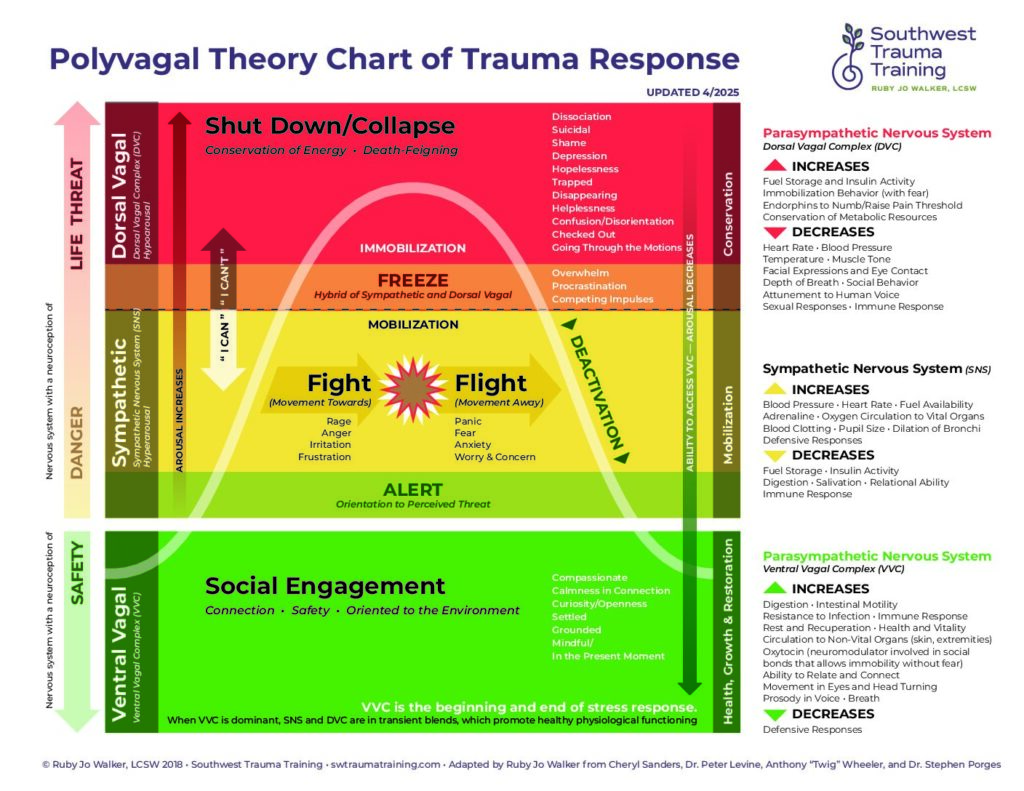
I love the Polyvagal Theory Chart of Trauma Response seen above, created by Ruby Jo Walker, LCSW at Southwest Trauma Training. It clearly explains how our nervous system reacts automatically depending on how safe our bodies feel in our environment. As you can see by the large wave going through the chart, becoming triggered deeply impacts our sense of safety. This triggered response can be big or small depending on how strongly we need to feel protected, what resources we have available to support us through a trigger, and what our window of tolerance (how much stress it takes to cause a reaction) is due to ongoing stressors impacting our nervous system.
This chart not only explains what activation looks like, but also reminds us that deactivation also must occur after a trigger, which typically follows the same path. This helps to normalize the scary feelings people often have when they feel themselves down-regulating from shutdown/collapse (red) into mobilization (yellow), and find themselves experiencing strong feelings of anxiety and panic, which in turn can make them want to avoid/shutdown again.
Naming this cycle is incredibly powerful. It helps release shame attached to becoming stuck in a trauma response, normalizing fear and creating space for a new path forward through compassionate understanding.
Our Mind-Body Connection and Polyvagal Theory
In addition to sharing how our system reacts to a trigger, this chart also shares the physiological responses (right-hand side) that are related to each state. People often come into my office wondering why they are always experiencing heart palpitations, tension migraines, body aches, difficulties eating and autoimmune conditions, and don’t see the connection to their mental health and well-being.
Our nervous system is the direct communicator between our brain and our bodies. There is no such thing as brain-only conditions, because our entire system integrates whether we have awareness of it or not. Through somatic therapy approaches including polyvagal theory, clients can release trauma stored in their bodies, reducing tension and ultimately, chronic pain and symptoms that clients are frustrated by.
Why Polyvagal Theory Matters in Therapy
In therapy, we often focus on thoughts, feelings, and behaviors. Polyvagal Theory reminds us that our bodies play a central role in how we experience life. Emotional reactions like panic, rage, or withdrawal are often the result of your nervous system doing its job—trying to protect you from harm.
By understanding Polyvagal Theory, clients can:
- Notice where they are in their nervous system: Are they calm and social (ventral vagal), anxious and reactive (sympathetic), or shut down and disconnected (dorsal vagal)?
- Track triggered responses: Recognize patterns in how their body reacts to certain situations.
- Learn regulation strategies: Shorten the duration and intensity of stress responses.
- Build consistent self-regulation skills: Over time, clients can move between states more flexibly, increasing resilience.
For clients with complex trauma backgrounds, acute traumatic events, or neurodiverse experiences, understanding the nervous system is particularly valuable. Often, these life experiences cause people to become “stuck” in sympathetic or dorsal vagal states, which can make emotional and social regulation difficult. Polyvagal-informed therapy can help people to develop awareness and skills to move toward a ventral vagal (safe) state more consistently.
Deb Dana, LCSW has been instrumental in the integration of Polyvagal Theory into psychotherapy. Her many books and resources offer important frameworks that break the more scientific knowledge of Porges’ work into bite-sized, easy-to-integrate tools.

How Polyvagal Theory Can Support Clients
Polyvagal Theory is very helpful in a therapeutic setting. It has been integrated into many types of psychotherapeutic approaches, lending important psychoeducation surrounding nervous system attunement. Polyvagal Theory for nervous system regulation can help clients feel less shameful about their automatic reactions and more empowered to respond with intention.
Here are some ways that Polyvagal Theory can support clients nervous systems:
1. Reducing Shame Around Emotional Responses
One of the most common experiences my clients share is shame about how they react—whether it is through panic, rage, depression, or dissociation. Polyvagal Theory helps reframe these responses as normal and adaptive. Your body isn’t “broken”—it’s responding to perceived threat or stress in a way that is designed to keep you safe. Understanding this can be incredibly liberating, reducing cycles of self-blame.
2. Building Somatic Awareness
Somatic awareness means noticing the signals your body gives you. These can include:
- Muscle tension
- Shallow or rapid breathing
- Tightness in the chest or stomach
- Heart racing or slowing
By learning to identify these cues, clients can start to recognize which nervous system state they are in. This awareness is the first step toward regulation.
3. Using Mindfulness to Build Present-Moment Awareness
Mindfulness practices help clients tune into the present moment, which strengthens the ventral vagal system. When we are present, we can notice stress signals before they escalate and respond in ways that feel safe and grounded. Simple techniques include:
- Focusing on the breath
- Grounding through the senses (feeling your feet on the floor, noticing textures or sounds)
- Guided body scans
4. Learning Nervous System Regulation Strategies
Once clients can notice their nervous system state, they can use strategies to regulate it. These include:
- Breathwork: Slow, diaphragmatic breathing helps activate the ventral vagal system.
- Movement: Gentle stretching, walking, or yoga helps discharge sympathetic energy.
- Co-regulation: Safe interactions with supportive people help the nervous system shift toward calm.
- Self-soothing techniques: Holding a warm mug, wrapping in a blanket, or listening to calming music can help.
Over time, clients find that triggered responses become shorter, less intense, and easier to manage, building autonomy and resilience.
Polyvagal Theory, Nervous System Regulation and Trauma Recovery
Trauma is often stored in the body. Polyvagal Theory helps explain why:
- Trauma can lock the nervous system into sympathetic (hyperarousal) or dorsal vagal (shutdown) states.
- Emotional symptoms like anxiety, dissociation, or irritability are adaptive responses to past danger, not personal weaknesses.
- Therapeutic approaches such as EMDR, Brainspotting, Internal Family Systems therapy, or trauma-informed CBT work well alongside Polyvagal-informed strategies. Polyvagal practices—like somatic awareness and mindfulness—prepare the nervous system to process trauma safely.
By learning to notice and regulate nervous system states, clients can recover more quickly, regain autonomy, and reduce shame associated with their reactions.
Practical Tips for Everyday Regulation
Even outside of therapy, you can use Polyvagal principles to support your nervous system:
- Notice your body’s signals: Check in with your tension, breathing, and energy levels. Building awareness internally allows space to pause between trigger and response.
- Use mindful breathing: Slow, deep breaths signal safety to the nervous system. Longer exhales than inhales helps to trigger the vagus nerve, which in turn helps to reduce fight/flight responses.
- Move gently: Walk, stretch, or sway to release built-up energy. Taking care of your body through gentle exercise supports nervous system regulation.
- Engage safely with others: Talking with a supportive friend or loved one can help regulate your nervous system through gentle co-regulation. Safety supports connection.
- Create safe environments: Soft lighting, calming music, or comforting textures cue your body that you are in a safe space. Listening to what your body is seeking from your spaces helps to make sure you are attending to your body’s needs throughout the day.
Even small, consistent actions can strengthen your ability to stay in ventral vagal states and respond to stress with more ease.
Final Thoughts
Polyvagal Theory is more than just a concept—it’s a practical framework for understanding yourself and your body. Emotional reactions, panic, or withdrawal are not signs of weakness—they are your body’s way of keeping you safe.
In therapy, understanding Polyvagal Theory helps clients:
- Reduce shame
- Track and regulate nervous system responses
- Build resilience and autonomy
- Process trauma safely and effectively
- Strengthen social engagement and connection
By learning to recognize your nervous system states, use mindfulness and somatic tools, and practice regulation strategies, you can move toward greater ease, presence, and connection in your life.
Your body is not the enemy—it’s a messenger. Listening, understanding, and working with your nervous system is a pathway to healing, growth, and self-trust.

0 Comments