
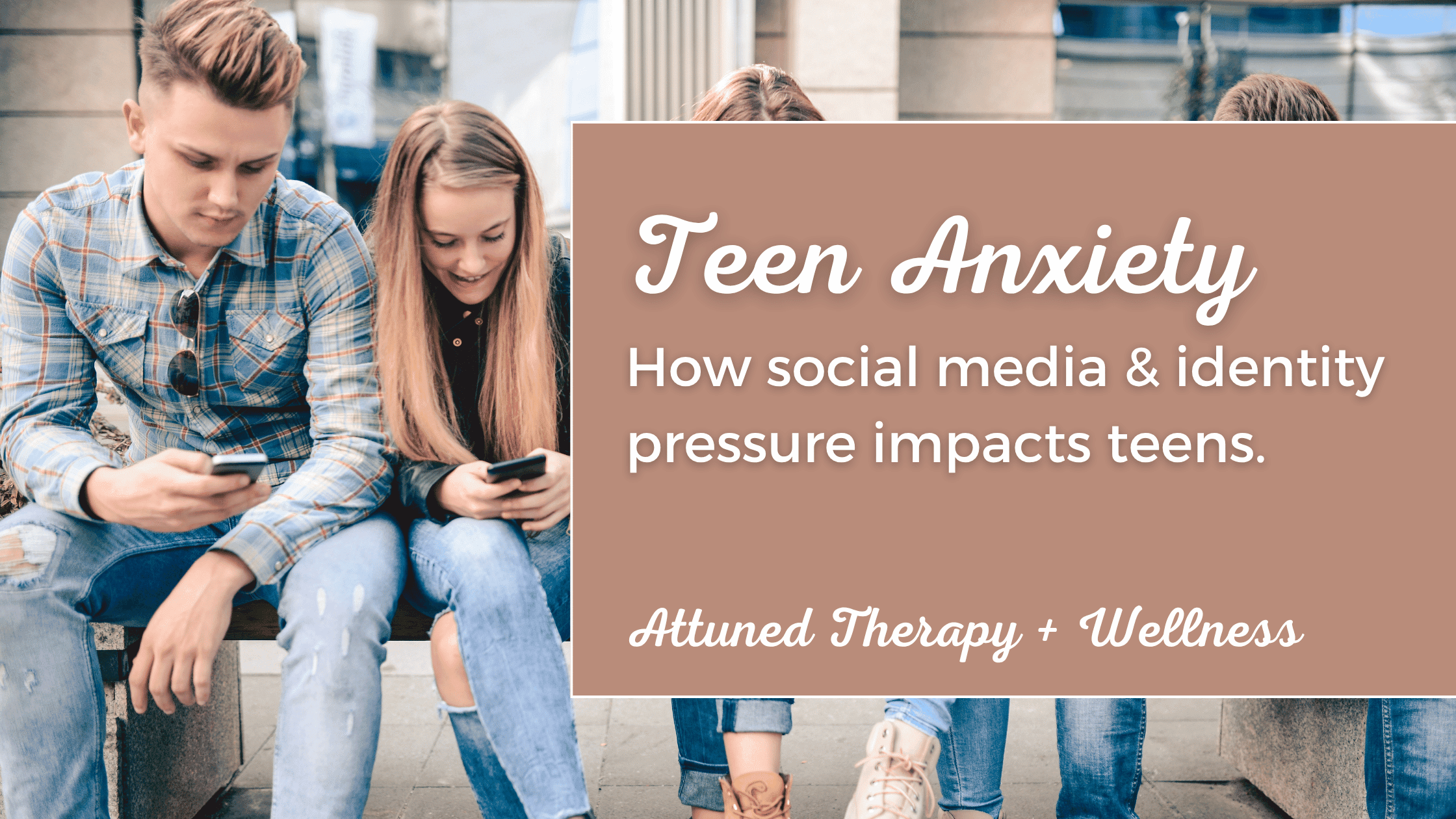
Across Ontario, more adolescents are reaching out for mental health support than ever before, and a recurring theme in therapy is the emotional impact of social media and identity pressure. For parents searching for a teen therapist in Grey Bruce or youth therapy in Kincardine, Ontario, it can be difficult to determine what is typical adolescent stress versus what may indicate rising anxiety or emotional overwhelm.
Today’s teens are growing up in a digital environment that is fundamentally different from previous generations. Social media can offer connection, entertainment, and creative expression, but it can also intensify comparison, self-doubt, and pressure to maintain a certain image or identity. Over time, these experiences can contribute to chronic anxiety, low self-worth, and emotional fatigue. A recent systematic review indicates that social media and smart phone usage relates to an increase in self-harm, suicidality and overall mental distress in youth.
Many families only seek support once symptoms become more noticeable. However, earlier intervention through adolescent therapy can play an important role in helping teens build emotional regulation skills, strengthen identity development, and navigate a highly connected world in a healthier way. Therapists can support families to lessen the impact of social media usage on youth mental health through the development of open, non-judgmental and age appropriate communication skills and strengthening parental relationships with teens.
Below are some of the most common patterns surrounding social media and identity pressure contributing to teen anxiety across Ontario.
1. Ongoing Comparison in a Highly Curated Digital World
One of the most consistent contributors to adolescent anxiety is the constant exposure to curated online content. Social media platforms tend to showcase edited, filtered, and selective moments, which can distort how teens perceive themselves and others. The development stage of adolescence involves questioning self-identity and developing individuation, which increases the likelihood that social media may negatively impact their self-worth and self-coherence over time.
Many adolescents begin to notice patterns such as:
- Comparing appearance, lifestyle, or social status to peers or influencers
- Feeling like they are falling behind or not measuring up
- Seeking approval through likes, views, or comments
- Feeling anxious after posting or engaging online
- Believing others are living more successful or fulfilling lives
Over time, this repeated comparison can quietly shape self-esteem. Even teens who appear confident on the outside may be struggling internally with self-criticism or pressure to keep up.
Adolescence is a key stage for identity formation, and when that process is influenced by constant comparison, it can become harder for teens to develop a stable and grounded sense of self.

Therapy can help adolescents begin to separate self-worth from external validation and develop a more internal and consistent sense of identity. Many families looking for a teen therapist in Grey Bruce or youth therapy in Kincardine, Ontario are often surprised by how strongly digital comparison influences mood, motivation, and confidence.
2. Pressure to Define Identity Too Quickly
Today’s adolescents are not only exploring identity privately, they are also often expected to present it publicly. Social media can create an unspoken pressure to define who you are early, clearly, and consistently. Keeping up with trends and required knowledge of internet-based information makes it challenging for teens to listen to themselves and maintain authenticity.
This may show up as:
- Feeling pressure to maintain a specific online image or aesthetic
- Worrying about how interests, opinions, or personality will be received
- Shifting identity depending on peer groups or platforms
- Fear of being misunderstood or socially rejected
- Overthinking how they are perceived both online and offline
While identity exploration has always been part of adolescence, social media can accelerate and externalize the process. Instead of identity developing gradually over time, teens may feel like they need to present a fully formed version of themselves before they feel ready.
This can create confusion, emotional strain, and anxiety, especially for teens who do not easily fit into narrow categories or trends.
In therapy, adolescents are supported in exploring identity at their own pace, without pressure to perform or conform. This is often a key focus for families seeking youth therapy in Kincardine, Ontario or a teen therapist in Grey Bruce for identity-related stress.
3. Increased Social Anxiety Through Digital Communication
Social anxiety in adolescents is no longer limited to face-to-face interactions. It now extends into text messaging, group chats, and social media platforms where communication is constant and visible. Social anxiety is a very common and real experience that many youth experience, requiring calm, compassionate support to reduce symptoms and encourage increased social interaction in safe settings. When it comes to digital communication, ensuring safety in social situations becomes increasingly challenging.
Common experiences of social anxiety related to social media include:
- Replaying conversations or messages repeatedly in their mind
- Worrying about tone, timing, or how messages were received
- Feeling anxious about being left out or ignored online
- Stress related to group chats or peer dynamics
- Fear of saying something embarrassing or misunderstood
Unlike in-person conversations, digital communication leaves traces that can be re-read and overanalyzed, which often increases rumination and emotional intensity. Teens can often feel pressure to belong on social media platforms that increasingly involve inappropriate content and bullying. For parents, the challenges this brings can result in uncertainty about how to best manage screen usage for their teen children.
For many teens, this leads to a heightened sense of social awareness that can feel exhausting or overwhelming.
Therapy can support adolescents in building tools to manage social anxiety, regulate emotional responses, and create healthier boundaries with digital communication. This is a common reason families reach out for a teen therapist in Grey Bruce when social stress begins impacting friendships or school life.
4. Emotional Exhaustion From Constant Connection
Many adolescents today are rarely truly disconnected. Between school platforms, social media, messaging apps, and entertainment feeds, there is often very little downtime for the nervous system to reset. Studies suggest that social media platforms change dopamine pathways over time, increasing risk of developing dependence and addiction of social media.
This can contribute to:
- Difficulty relaxing or switching off mentally
- Disrupted sleep patterns due to late-night screen use
- Increased irritability or emotional sensitivity
- Reduced focus or motivation
- Feeling mentally overloaded without a clear cause
- Disconnection from typical activities and relationships
In teens, burnout does not always present as exhaustion in the traditional sense. It may show up as withdrawal, mood changes, irritability, or increased anxiety.
Parents often interpret these changes as typical adolescent behaviour, but they can also indicate that a teen is experiencing sustained emotional overload. It is important that parents engage their teens openly and in a supportive way, shifting from blaming/shaming towards curiosity and deepening understanding.
This is one of the most common concerns leading families to seek youth therapy in Kincardine, Ontario, particularly when digital habits begin to affect wellbeing and daily functioning.
5. Anxiety About the Future and Feeling Behind
Alongside social and identity pressures, many adolescents are carrying increasing anxiety about their future. Current events in the world, housing markets, and job uncertainty looms over the heads of younger generations on a daily basis. Academic expectations, extracurricular demands, and perceived competition with peers can create a constant sense of urgency. This can cause teens to experience fight/flight/freeze states as a result of feeling overwhelmed, making it difficult to feel at ease in the world around them.
Teens may express concerns such as:
- Feeling like they are not doing enough
- Believing others are more advanced or successful
- Feeling pressure to plan their entire future early
- Uncertainty about direction or life choices
When combined with social media exposure, where peers often appear highly productive or accomplished, these feelings can become amplified. Focus on appearances on social media in youth is directly correlated with perfectionism and disordered eating.
Many adolescents begin to internalize the idea that they need to have everything figured out quickly, which can increase perfectionism and emotional stress. This places teens at increased risk when life gets messy or doesn't go as planned, resulting in feeling uncertain about their self-worth and pressure to perform at high levels continually.
Therapy can help teens slow this internal pressure, build perspective, and understand that identity and direction naturally develop over time rather than all at once.
Why Teen Anxiety is Often Missed at First
A common pattern in adolescent mental health is that anxiety is not immediately visible. Teens often cope by internalizing stress or masking it through behaviour changes rather than directly expressing what they are experiencing. In youth, anxiety may be easily masked by focusing on self-presentation and perfectionistic, high-functioning attitudes.
Signs of teen anxiety over time may look like:
- Withdrawal from family or friends
- Increased irritability or sensitivity
- Perfectionism or overachievement
- Changes in sleep, appetite, or motivation
- Dismissal of concerns when asked directly
Because emotional awareness is still developing during adolescence, anxiety often shows up indirectly rather than through clear verbal expression. As a result, parents may assume things are typical developmental changes when there may actually be underlying distress.
Teens can struggle to put words to what they feel. Physical complaints of stomach pain, heart racing, sweaty palms, or inability to sit still can be signs that they are struggling with anxiety symptoms. Picking up on subtle signals that your teen is stressed, overwhelmed or anxious allows for early intervention and support.
Why Early Support Can Make a Meaningful Difference
Many families reflect later in therapy that they wish they had reached out sooner.
When anxiety becomes longstanding, teens often develop coping patterns that temporarily reduce discomfort but can also reinforce avoidance or emotional disconnection over time.
Early support can help adolescents:
- Develop emotional regulation skills
- Strengthen self-esteem and identity clarity
- Improve sleep, focus, and daily functioning
- Reduce social comparison and self-criticism
- Build healthier digital boundaries
Seeking support does not mean something is seriously wrong. In many cases, it reflects a desire to help a young person navigate a complex and fast-moving world with more support and understanding.
More families are now looking for a teen therapist in Grey Bruce or youth therapy in Kincardine, Ontario earlier in the process, rather than waiting for challenges to intensify.
What Youth Therapy Can Support
At Attuned Therapy + Wellness, we provide youth therapy in Kincardine, Ontario and virtually Ontario-wide. We support adolescents navigating a range of emotional and developmental challenges, including:
- Anxiety and excessive worry
- Social media stress and comparison
- Identity development and self-esteem concerns
- School pressure and performance anxiety
- Social anxiety and peer relationships
- Emotional regulation difficulties
- Family communication challenges
- Burnout and overwhelm
- Life transitions and adjustment difficulties
Our approach is trauma-informed and developmentally sensitive, with a focus on helping adolescents better understand their emotional world rather than suppress or avoid it.
Therapy may integrate attachment-based and emotion-focused approaches to support teens in building resilience, emotional clarity, and a more stable sense of self in a highly connected environment.
Youth Therapy in Kincardine, Ontario and Teen Therapist Support in Grey Bruce
If you are looking for a teen therapist in Grey Bruce or youth therapy in Kincardine, Ontario, Attuned Therapy + Wellness offers both in-person and virtual therapy options across Ontario.
Many parents feel uncertain about whether their teen “needs” therapy or is simply going through a phase. In reality, early support can make a significant difference in preventing anxiety patterns from becoming more entrenched and helping adolescents feel more grounded and understood.
We offer a free 15-minute consultation to help families explore whether youth therapy is a good fit. Support does not need to wait until things feel unmanageable — it can begin when concerns first start to emerge.




0 Comments
Trackbacks/Pingbacks