
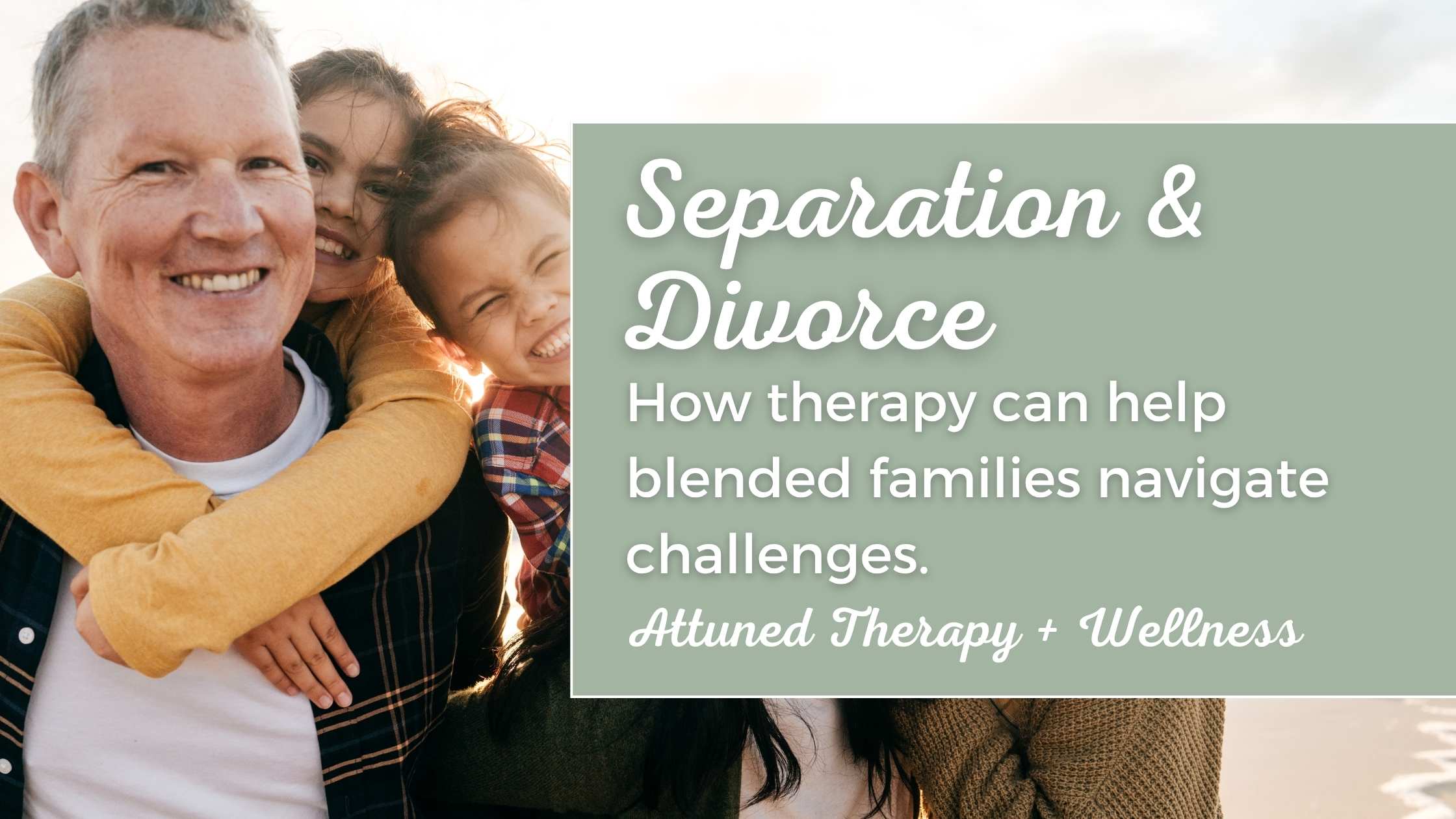
When Separation Impacts the Whole Family
Separation and divorce are among the most emotionally challenging transitions a family can experience. Even when separation is necessary or ultimately healthier, it often brings grief, uncertainty, stress, and significant changes in family dynamics.
Parents may feel overwhelmed by decisions related to co-parenting, communication, finances, routines, and supporting their children emotionally.
Children and teens may experience confusion, sadness, anxiety, anger, or loyalty conflicts. Many also struggle with adjusting to changes in homes, routines, and relationships.
For families searching for counselling Bruce County Ontario or family therapy Bruce County, therapy can provide support during a time that often feels emotionally intense and difficult to navigate alone.
How Separation Affects the Family System
Family transitions affect more than individuals. They affect the entire family system.
How parents communicate and manage conflict plays a major role in how children adjust over time. Children tend to do better when conflict is reduced and emotional safety is protected.
Separation can also create instability in daily life. This may make parenting feel more complex and emotionally demanding.
Children often experience a wide range of emotions during this time, including:
- sadness
- confusion
- anger
- worry
- guilt
- fear about the future
Some children express emotions openly. Others do not. Instead, distress may show up as:
- sleep difficulties
- behavioural changes
- irritability
- withdrawal
- clinginess
- school challenges
- social anxiety
A key protective factor for children is stability. Children cope best when they:
- maintain strong relationships with caregivers
- have predictable routines
- feel emotionally safe
- are reassured they are not responsible for the separation
Supporting Parents Through Emotional Overloadi
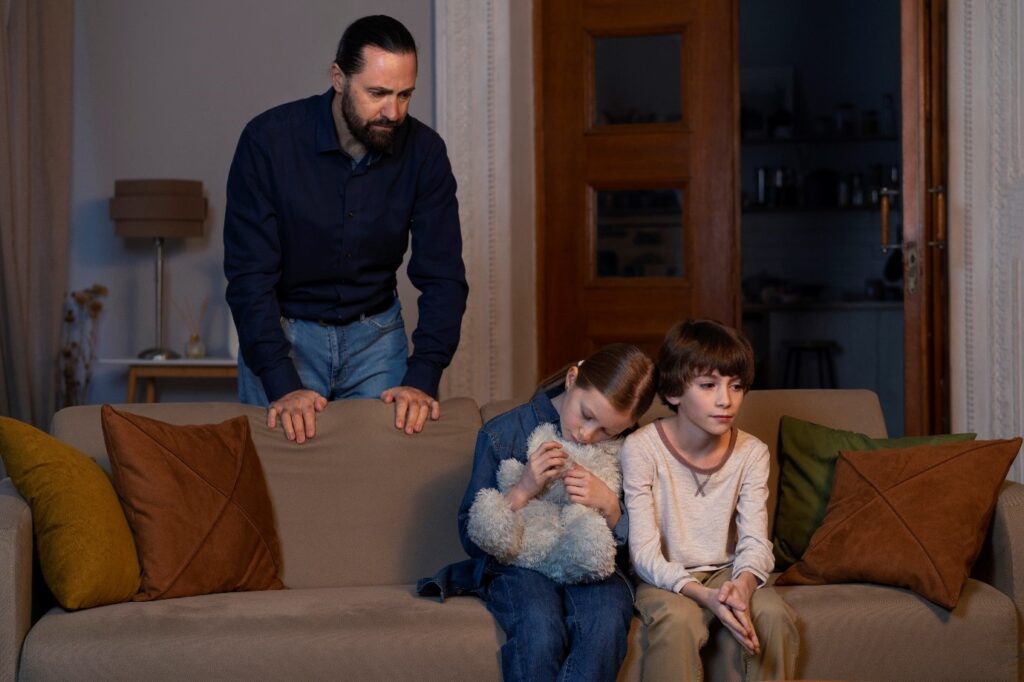
Parents are often navigating their own emotional stress while supporting their children.
This can feel especially difficult when co-parenting relationships are strained or communication has broken down.
During these times, families often benefit from a neutral space where they can:
- process emotions safely
- improve communication
- reduce conflict
- develop practical co-parenting strategies
Family counselling can help parents respond more calmly and consistently. This reduces emotional stress for children and improves overall family stability.
How Family Therapy Helps During Separation or Divorce
Family therapy is not about blame. It is not about deciding who is right.
Instead, it focuses on helping families adjust to change with more clarity, emotional awareness, and connection.
Common goals include:
- improving co-parenting communication
- reducing conflict exposure for children
- supporting children to express emotions safely
- navigating blended family dynamics
- processing grief and loss
- rebuilding emotional trust
- strengthening parent-child relationships
- improving conflict patterns
- creating consistency between households
Therapy also creates structure for difficult conversations. This helps reduce misunderstandings and prevents children from feeling caught in the middle.
Blended Families and Adjustment Over Time
Blended families often experience additional emotional and relational complexity.
Even when there is love and good intention, adjustment takes time.
Families may need to navigate:
- new household roles and expectations
- different parenting styles
- co-parenting across households
- loyalty conflicts
- uncertainty about stepparent roles
- grief from the original family structure
- difficulty building trust and closeness
- new routines and family identities
Children often experience both gain and loss at the same time. They may feel excited about new relationships while also grieving their previous family structure.
Research on divorce and separation and child development shows that children adjust best when they feel emotionally secure, supported, and protected from ongoing conflict.
Loyalty Conflicts in Blended Families
Loyalty conflicts are common in blended families.
A child may feel that caring about a stepparent means they are betraying a biological parent. This can create internal stress, even when the child is open to connection.
These reactions are normal. They reflect emotional attachment, not resistance.
Adults also experience adjustment challenges.
Stepparents may feel unsure of their role. Biological parents may feel emotionally pulled between relationships.
The National Stepfamily Resource Center highlights that role confusion and boundary negotiation are common in stepfamily development.
Blended Families Take Time to Develop
Strong blended families do not form quickly.
Many clinicians and researchers suggest that it can take two to five years for blended families to feel stable and connected.
This timeline depends on several factors, including:
- children’s ages
- co-parenting dynamics
- conflict levels
- emotional readiness
- consistency between households
The Stepfamily Foundation emphasizes that strong stepfamilies are built through repeated positive experiences over time. Trust grows gradually, not instantly.
Attachment and Emotional Safety in Therapy
Many therapists use attachment-based and emotionally focused approaches when working with families in transition.
These approaches focus on emotional safety, connection, and responsiveness.
Emotionally Focused Family Therapy (EFFT) has shown positive outcomes for improving:
- emotional communication
- family connection
- relationship stability
- resilience during stress
Therapy often shifts focus away from blame and toward understanding emotional needs.
In practice, families learn to:
- feel more emotionally understood
- express needs more clearly
- recognize conflict cycles
- rebuild trust after rupture
- strengthen emotional safety
When emotional safety improves, families often find everyday challenges easier to manage.
Supporting Children Through Change
Children do not always show distress directly.
Some become more emotional or reactive. Others withdraw or shut down. Changes may also appear in sleep, behaviour, or school performance.
Transitions between homes and changing routines can increase emotional stress.
The Canadian Paediatric Society notes that children cope best when parents:
- reduce conflict exposure
- provide reassurance
- maintain consistency
- support emotional connection across households
Counselling can help children and parents:
- understand emotional responses
- build coping strategies
- improve communication
- strengthen attachment
- create predictability and stability
Family therapy can involve parents, children, or the whole family depending on needs.
What to Look for in Counselling in Bruce County Ontario
Finding the right therapist can feel overwhelming.
When looking for family therapy in Bruce County or counselling in Bruce County Ontario, it may help to look for professionals who:
- use evidence-based and trauma-informed approaches
- understand attachment and family systems
- have experience with separation and co-parenting
- support blended family adjustment
- offer a safe, non-judgmental environment
The therapeutic relationship is one of the strongest predictors of success in counselling.
Feeling safe, understood, and supported helps families create meaningful change over time.
Separation Does Not Have to Mean Disconnection
Separation and divorce can feel painful and destabilizing.
However, families can move toward healthier and more connected relationships over time.
With support, it is possible to:
- reduce conflict
- improve communication
- strengthen emotional safety
- support children through change
For many families in Bruce County, counselling becomes a space not only for coping, but for rebuilding connection and creating a more grounded way forward.
Book a Consultation
If you are ready to explore support, you can book a free 15-minute phone consultation with a therapist on our team [here].
Helpful Resources
- ICEEFT – Emotionally Focused Therapy: https://iceeft.com/what-is-eft/
- ICEEFT Research: https://iceeft.com/research/
- PLOS ONE – EFT research: https://journals.plos.org/plosone/
- Canadian Paediatric Society: https://caringforkids.cps.ca
Encyclopedia on Early Childhood Development: https://www.child-encyclopedia.com/divorce-and-separation


0 Comments